
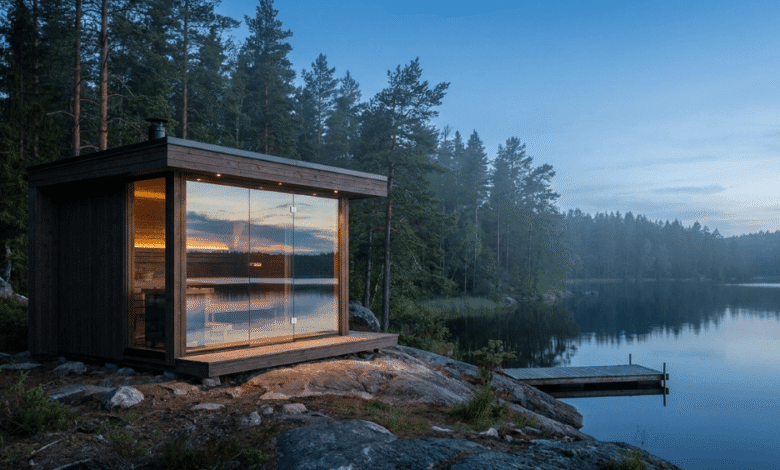
Whether you need 240V depends almost entirely on heater size. Small infrared cabins under roughly 1.5 to 2 kW can often run on a standard 120V, 15 or 20 amp circuit, while most traditional electric heaters above 4 to 6 kW require a dedicated 240V circuit sized by a licensed electrician. Budgeting the wiring correctly up front avoids the most expensive mistake in outdoor sauna shopping: buying a heater the existing electrical service cannot support.
Which Heaters Actually Need 240V?
Most traditional Finnish-style heaters in the 6 kW to 9 kW range, sized for a mid to full-size cabin, are built for 240V single-phase power and a dedicated circuit with its own breaker. That is not optional or something a smaller wire gauge can work around safely. Compact infrared panel setups, by contrast, are often designed to draw under 15 amps on standard 120V household power, which is one reason infrared has become the lower-cost, lower-hassle entry point for buyers without room in the budget for new electrical work.
What Does a 240V Run Actually Cost?
Pricing varies by distance from the main panel, whether a trench is needed, and local labor rates, but a straightforward dedicated 240V circuit run from an existing panel with reasonable proximity commonly falls between $800 and $2,000 including permit and inspection fees. Longer underground runs, rocky soil that slows trenching, or a panel that is already near capacity and needs a subpanel or upgrade first can push the number to $2,500 or $4,000. Getting two or three quotes before committing to a heater size is one of the more effective budget moves a buyer can make, since the electrical work is sometimes a larger line item than the heater itself.
Where Can a Tight Budget Legitimately Save on Wiring?
Digging the trench and laying conduit yourself, where local code allows homeowner labor, is a realistic way to cut a meaningful chunk of the total cost, since trenching is often priced by the linear foot and labor-heavy rather than skill-heavy. Positioning the cabin as close as practically possible to the existing electrical panel or an easily accessible junction point shortens the run and directly lowers material and labor cost. Buyers comparing lower-wattage 120V-compatible models against full 240V traditional builds before finalizing a site plan can look at sweatdecks.com to see which cabin sizes pair with which heater draw, since matching cabin choice to the electrical work you are actually willing to pay for avoids a costly mid-project change of plans.
What Should You Never Cut Corners On?
The panel connection, breaker sizing, and the wire run itself should go through a licensed electrician, full stop. This is not a place to save money by skipping code, both because outdoor circuits face moisture and ground-fault risks that indoor wiring does not, and because unpermitted electrical work can complicate an insurance claim or a future home sale. A ground-fault circuit interrupter breaker is standard and required in most jurisdictions for an outdoor heater circuit, and it is inexpensive relative to the risk it manages. Skipping the permit to save the fee is a false economy that shows up later, not a real budget win.
Does a Wood-Fired Heater Avoid This Cost Entirely?
A wood-fired stove sidesteps the dedicated circuit question almost completely, since the heat source itself needs no significant electrical supply. Most owners still want a simple 120V outlet nearby for a light or a phone charger, which is a far smaller and cheaper addition than a 240V run. For a buyer trying to minimize upfront electrical cost specifically, a wood-fired build is worth weighing against an electric heater even before comparing the two on fuel cost or convenience, since the wiring line item disappears almost entirely.
Does the Existing Panel Even Have Room?
Before pricing anything else, it is worth confirming the home’s main panel has an open breaker slot and enough remaining capacity for the new circuit. Many older homes, particularly ones with 100 amp service, are already close to capacity once central air, an EV charger, or other large appliances are accounted for. An electrician can check this in a short visit, often for less than the cost of the eventual wiring job, and it prevents the unpleasant surprise of needing a full panel upgrade, which can add $1,500 to $3,000 to a project that otherwise looked affordable.
Is Sauna Use Itself Worth Planning the Electrical Budget Around?
Given that the wiring can be one of the larger costs in the whole project, it is fair to ask whether it is worth planning around at all. A Mayo Clinic Proceedings review found regular sauna bathing associated with a range of cardiovascular and general health benefits, and an older review in the American Journal of Physiology reported consistent associations between regular heat exposure and favorable outcomes across multiple studies. A separate systematic review in Evidence-Based Complementary and Alternative Medicine reported similar associations across regular sauna users more broadly. These are association findings, not proof that sauna use alone changes health outcomes, but they are part of why many households treat the wiring investment as a one-time cost supporting years of regular use rather than an expense to minimize at every step. For anyone reading further on electrical safety around outdoor structures, both the National Fire Protection Association and UL publish general guidance worth a look before finalizing a plan.
Frequently Asked Questions
Can I plug an outdoor sauna into a regular 120V outlet?
Small infrared cabins under about 1.5 kW often can, using a standard 15 or 20 amp outdoor-rated circuit. Most traditional heaters over 4 kW need a dedicated 240V circuit instead.
How much does running 240V power to a backyard sauna cost?
A basic dedicated run from an existing panel with a short trench often lands between $800 and $2,000. Longer distances, a full trench, or a panel upgrade can push that closer to $3,000 or more.
Do I need a permit to add a 240V circuit outdoors?
In most U.S. jurisdictions, yes. Outdoor electrical work typically requires a permit and inspection, and skipping it can create problems later with insurance claims or a home sale.
Can I do any of the wiring myself to save money?
Digging the trench and setting conduit yourself is a common way to cut labor cost, but the panel connection and the final wiring to the heater should go through a licensed electrician for both safety and code sign-off.
Is a wood-fired heater a way to avoid the electrical cost entirely?
Yes, a wood-fired stove needs no dedicated circuit at all, which removes the electrical line item from the budget completely, though most models still benefit from a simple 120V outlet nearby for lighting.
References
- Benefits and risks of sauna bathing, The American Journal of Medicine, 2001
- Effects of heat and cold on health, with special reference to Finnish sauna bathing, American Journal of Physiology, 2018
- Clinical Effects of Regular Dry Sauna Bathing: A Systematic Review, Evidence-Based Complementary and Alternative Medicine, 2018
- National Fire Protection Association, general electrical and structure safety guidance
- UL, electrical product and safety standards

